Georgian Families
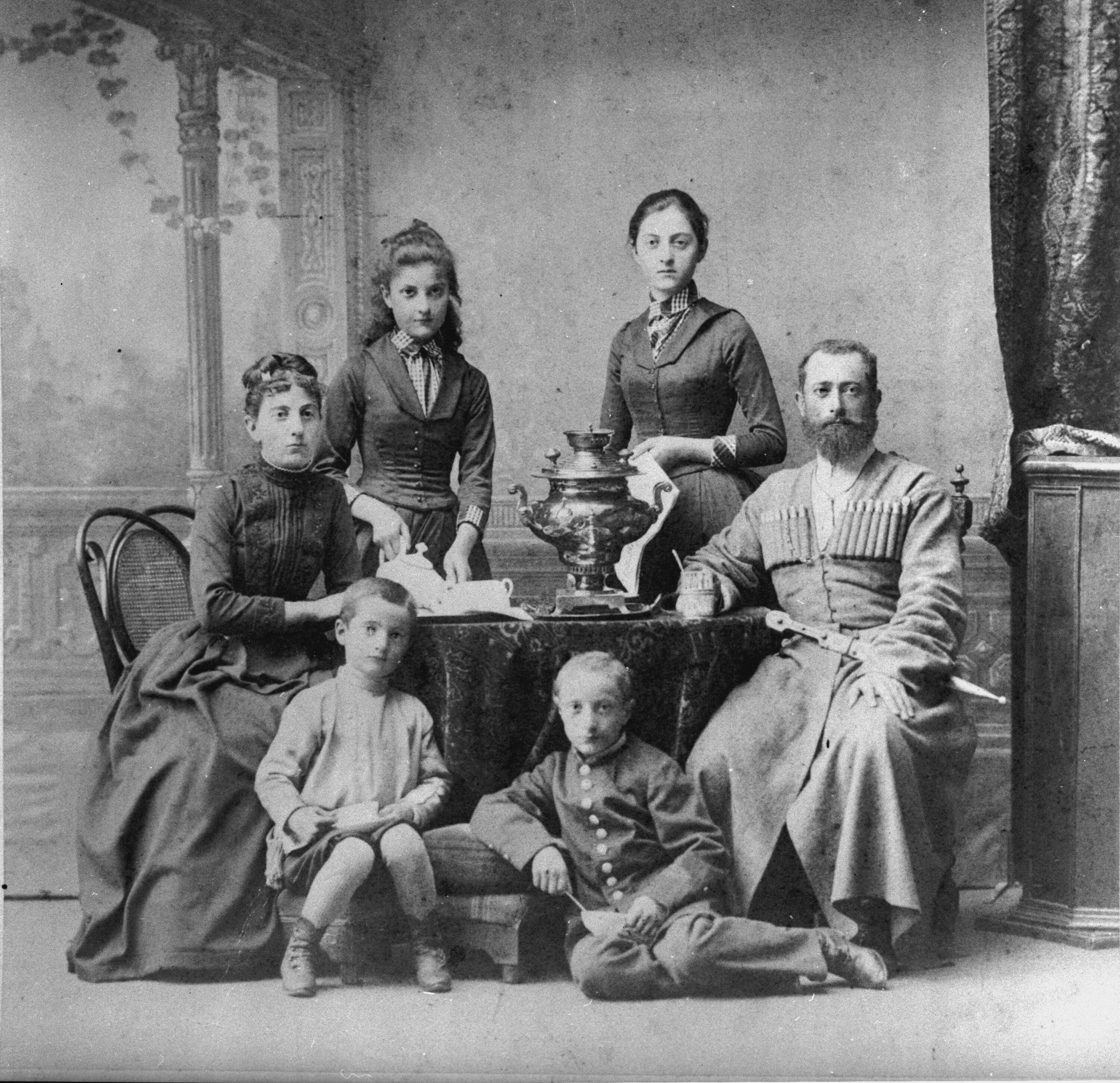
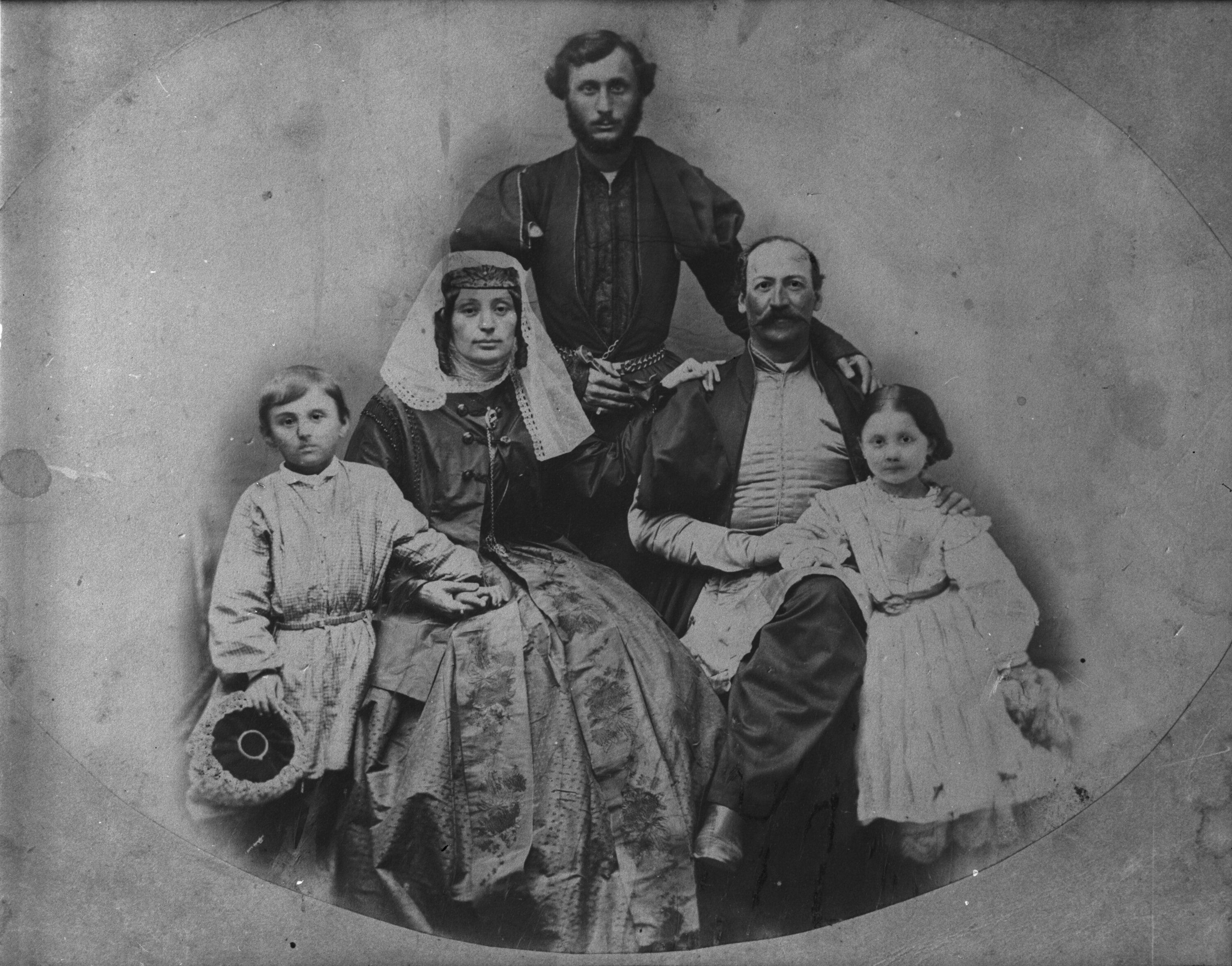
The depiction of family groups has deep roots in Georgian visual culture. Medieval church frescoes in Khobi, Tsalenjikha, Nekresi, and other sites frequently present family compositions arranged frontally and rendered in a planar manner. This tradition continued into the mid-19th century, exemplified by the painted group portrait of the family of Nikolai Mukhran-Batoni, executed by a Georgian artist in the spirit of monumental fresco painting.
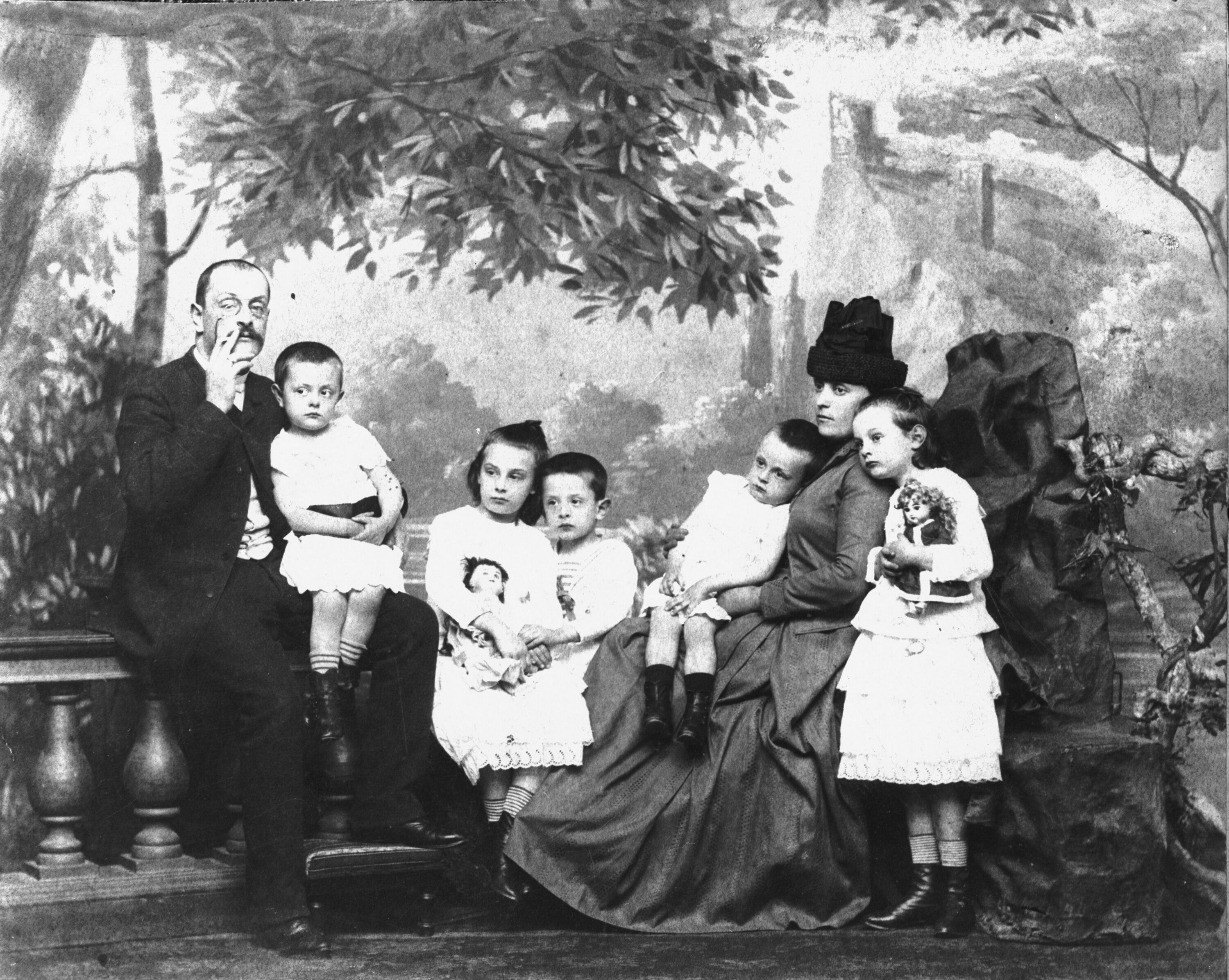
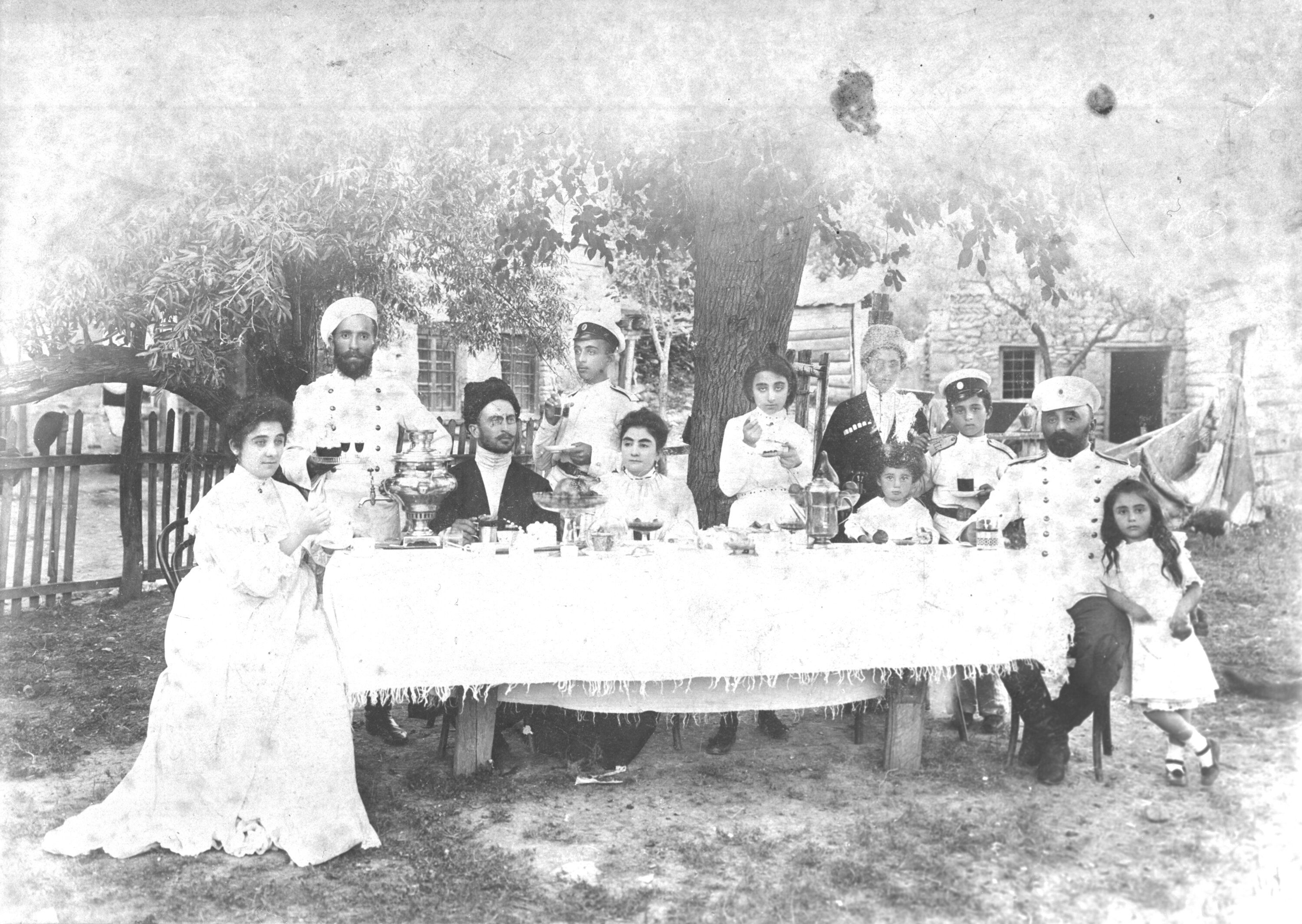
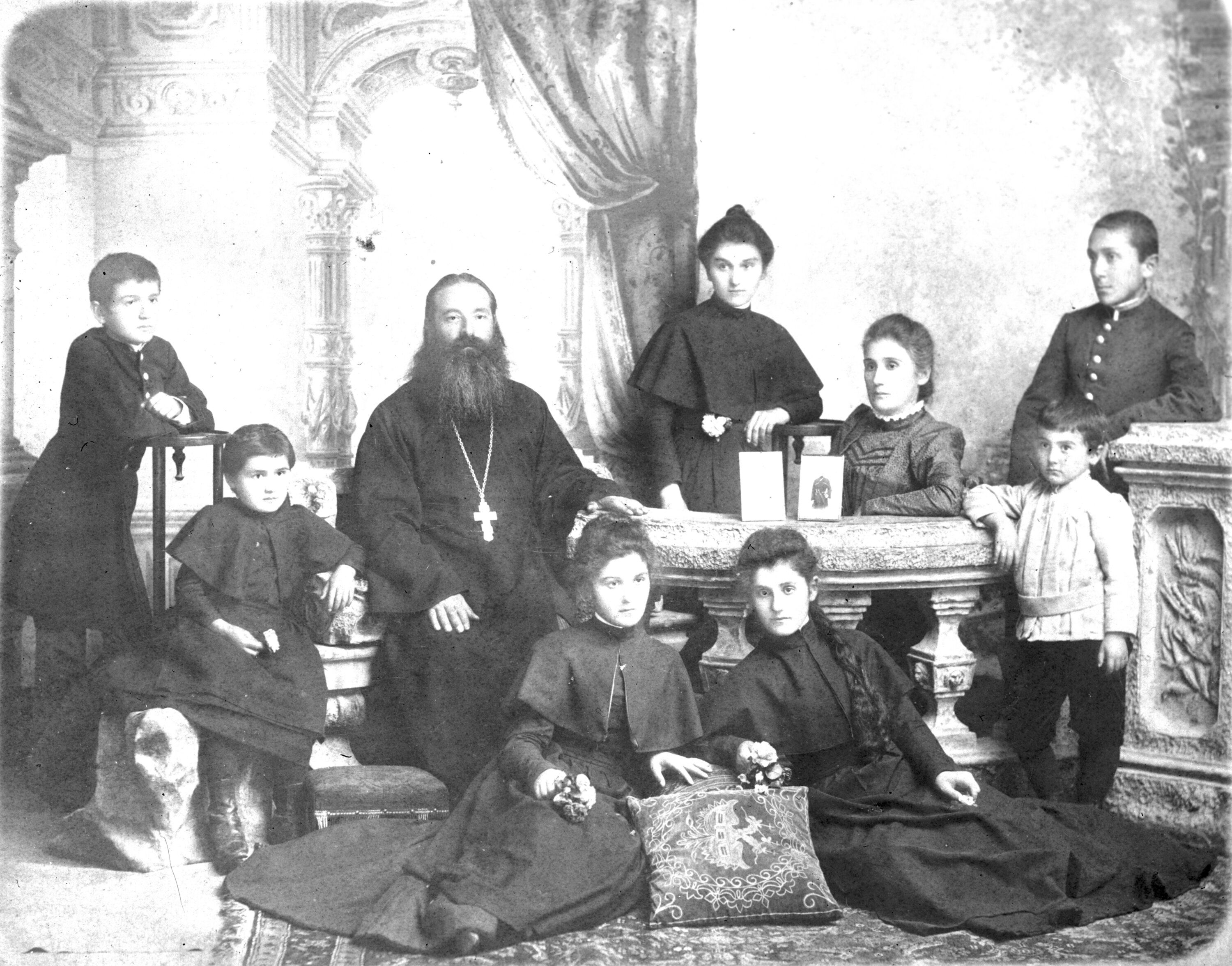
With the introduction of photography, it became possible to portray entire families with unprecedented ease. Given the traditionally strong family ties in Georgian society, family photography quickly gained popularity. Frontal compositions reveal complex family structures: alongside parents and children, photographs often include extended relatives and elders from both sides of the family.
At the request of patrons, absent family members were sometimes incorporated into group portraits using earlier photographs, while in some cases individuals were photographed holding images of deceased relatives. These practices reflect both emotional bonds and commemorative traditions.
During this period, sections of the Georgian nobility increasingly adopted European lifestyles and dress, while most Georgian women continued to wear traditional attire. International marriages—Georgian-Armenian, Georgian-Russian, Georgian-Greek, Georgian-German, among others—were not uncommon, and the mutual influence of different cultures is clearly visible in family portraits of the era.
Curated by: Giorgi Gersamia